Velcro for Patches: 9 Expert Tips for Easy Attachment
CPCustom Patch House9 min read
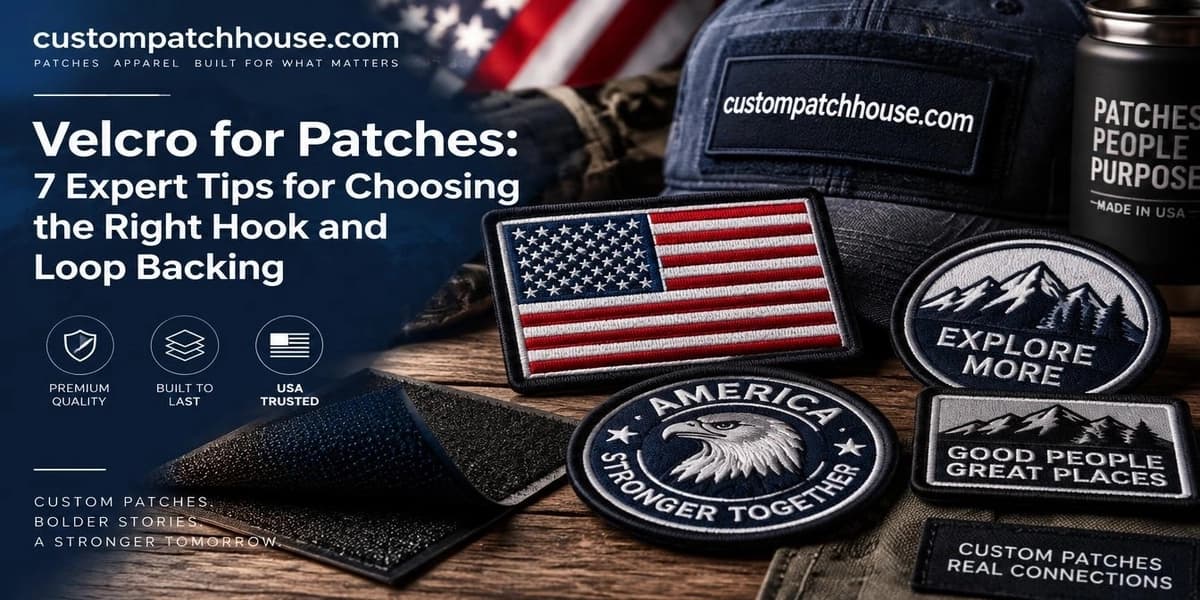
Velcro for Patches makes it easy to add, remove, and swap out custom patches that you don’t want to irreparably sew onto your tactical vests and shirts. At Custom Patch House, we know how important it is to choose the right materials for your custom patches and all of their parts. Here’s how to attach Velcro or convert patches and what kind of backing you need.
What Is Velcro for Patches and How Does It Work?
Velcro for patches allows you to change the patches easily thanks to a hook and loop fastening system, with one surface covered with hooks and the other with loops.
Understanding Hook-and-Loop Fasteners
The fastening system has two components:
Hook side: The rough surface containing small hooks.
Loop side: The soft surface that catches the hooks.
When pressed together, these surfaces create a secure connection that can be separated whenever you need to change a patch.
Why Choose Removable Patch Backing?
Removable adhesive is useful for things like military uniforms, backpacks, jackets, workwear or morale patches so you can swap the design while leaving the adhesive panel on.
Different Types of Velcro Backing for Patches
Choosing the right backing depends on your patch material and intended use.
Sew-on Velcro: Stitched directly onto the patch for a durable fabric attachment.
Adhesive-backed Velcro: Uses a peel-and-stick adhesive for compatible surfaces.
Iron-on Velcro: Uses heat-activated adhesive designed for compatible materials.
Heavy-duty Velcro: Designed for applications requiring stronger fastening performance.
For clothing and frequently used fabric patches, sew-on backing is generally preferable. Adhesive products should only be used where their manufacturers confirm material compatibility.
Velcro for Patches vs. Sewing: Which Is Better?
Both methods have advantages, but the best option depends on whether you need a permanent or removable attachment.
Feature | Velcro backing | Traditional sewing |
Removability | Yes | Usually no |
Design changes | Easy | Requires removing stitches |
Installation | Requires compatible backing | Requires needle and thread |
Durability | Depends on fastener and attachment | Depends on stitching and fabric |
Best for | Tactical gear and interchangeable patches | Permanent applications |
Velcro is ideal when you want to change designs regularly, while traditional sewing works well for permanent attachments.
Materials and Tools Needed to Attach Velcro to Patches
Before starting, prepare these basic materials:
Your existing patch.
Compatible hook-and-loop strips.
Fabric glue, if suitable for your materials.
Needle and strong thread.
Scissors and measuring tape.
Fabric clips or pins.
A clean, flat working surface.
You only need the tools required for your selected attachment method.
How to Choose the Right Velcro Backing for Your Patch
Consider the patch material, attachment method and expected usage before selecting backing.
Consider Your Patch Material
Embroidered and woven patches can be sewn into place while felt patches can be sewed or glued. You’ll need specialized adhesives to attach PVC and leather patches.
Consider Durability and Usage
For frequently used uniforms and gear, you may prefer to use something that gets sewn on. The adhesive versions are good for other types of projects.
Be sure to have enough backing to get behind the patch.
How to Attach Velcro to a Patch: 3 Easy Methods
There are three common ways to attach hook-and-loop backing, depending on your patch material and durability requirements.
Method 1: Attach Velcro Using Adhesive
Adhesive-backed Velcro offers a convenient no-sew option for compatible surfaces.
Clean the back of your patch.
Measure and cut the fastener.
Check adhesive compatibility.
Remove the protective liner.
Position and press the fastener firmly.
Allow the adhesive to cure according to its instructions.
Avoid using ordinary peel-and-stick products on washable fabric unless specifically recommended.
Method 2: Use Fabric Glue for a Strong Bond
Fabric glue can attach Velcro to suitable textile surfaces without stitching.
Clean and dry the patch backing.
Cut the fastener to the required size.
Apply a thin layer of compatible fabric glue.
Position the fastener carefully.
Press the surfaces together.
Allow the adhesive to cure fully.
Different adhesives have different material requirements and curing times. For more guidance, read our Fabric Glue for Patches guide.
Method 3: Sew Velcro Backing Onto Your Patch
Sewing is generally a reliable option for patches that experience regular handling.
Place the hook side against the back of your patch.
Secure it with fabric clips or pins.
Use a suitable needle and strong thread.
Stitch around the edges.
Reinforce the corners.
Remove loose threads and check the attachment.
For frequent fabric applications, sewn backing is generally a better option than relying entirely on adhesive.
How to Make Velcro Patches From Scratch
Making Velcro patches involves creating your design and attaching compatible backing.
Choose your patch material, such as embroidery, woven fabric or felt.
Create the design and finish its edges.
Measure and prepare the hook-and-loop backing.
Attach it using suitable stitching or adhesive.
Test the finished patch on a compatible loop panel.
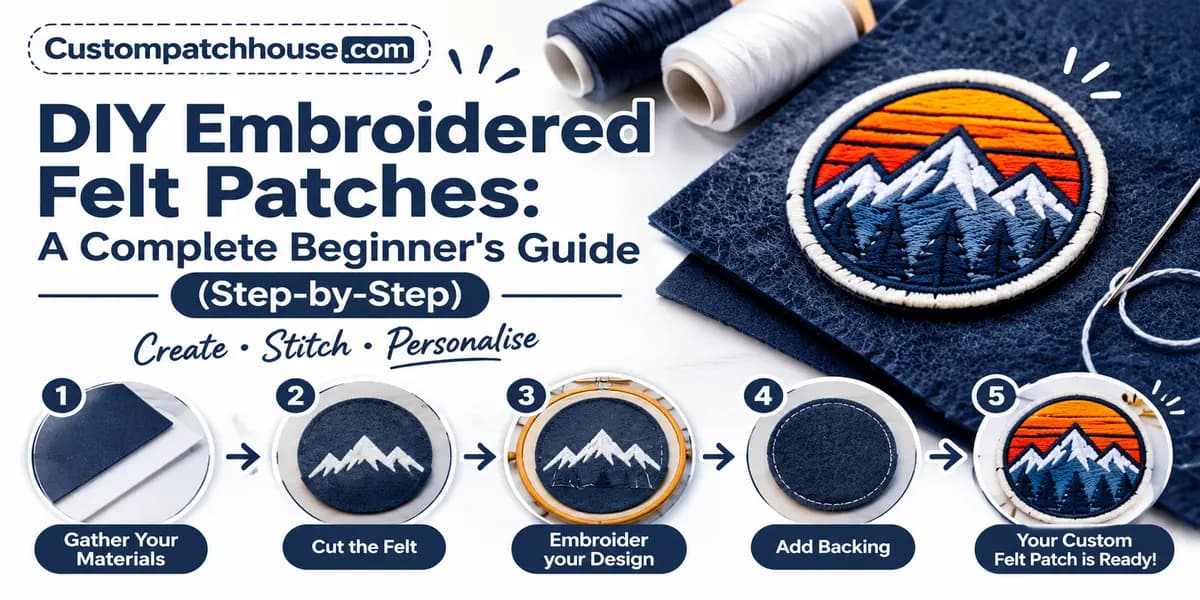
If you're into DIY, we have a list of ideas for making your own DIY Embroidered Felt Patches. If you want some more complicated designs, opt for patches that are made industrially so you have perfect stitching and edges with a backing.
How to Turn an Iron-On Patch Into a Velcro Patch
You can sometimes convert an existing iron-on patch into a removable version, provided its backing remains suitable.
Follow these steps:
Carefully remove the patch from the garment if already attached.
Inspect the backing for leftover adhesive.
Clean the surface using a compatible method.
Allow it to dry completely.
Attach suitable hook-and-loop backing through stitching or compatible adhesive.
Test the patch on the intended loop panel.
Avoid excessive heat or aggressive adhesive removers, as these can damage the patch material.
How to Add Velcro to an Embroidered Patch
Embroidered patches have decorative stitching that requires careful handling. Before attaching backing, inspect the reverse side and identify a suitable fabric area.
For a secure finish:
Position the backing without covering important stitching.
Use a needle suitable for the patch thickness.
Stitch around the fastener edges.
Avoid excessive glue that could penetrate the embroidery.
Do not apply direct heat to delicate decorative threads.
If you need professionally finished designs, explore our custom embroidered badges no minimum order options at Custom Patch House.
Hook Side vs. Loop Side: Which Goes on the Patch?
The most common use is to point the hook to the back of the patch and the loop to the front (the backpack, etc. ).
Just check the attachment panel on your backpack or uniform.
How to Choose the Right Velcro Size for Patches
Measure the patch before you cut the backing, taking into account how you want it to look once attached.
For example, if you’re making a name patch, you may not want the adhesive to extend far beyond the edges of the patch.
How to Remove Velcro Backing From a Patch Safely
If you have a sew-on backing, you can use a seam ripper to remove the stitches. If your patch has adhesive on the back, follow the manufacturer’s instructions for how to remove the backing and use a cleaner that’s compatible with the material.
How to Clean and Maintain Velcro Patches
Dust, lint and loose fibres can collect between the hooks and reduce fastening performance.
Maintain your patches by:
Removing debris with a suitable stiff brush.
Keeping hook and loop surfaces connected during washing where appropriate.
Following garment washing instructions.
Inspecting stitching and edges regularly.
Replacing damaged backing when necessary.
For additional manufacturer guidance, consult the VELCRO® Brand cleaning and maintenance recommendations.
Common Mistakes to Avoid When Attaching Velcro to Patches
Mistake | Better approach |
Using unsuitable adhesive | Check material compatibility |
Cutting backing too small | Measure before cutting |
Applying excessive glue | Use a controlled layer |
Applying heat to embroidery | Protect decorative stitching |
Incorrect hook-and-loop orientation | Check the existing panel |
Washing without securing fasteners | Follow recommended washing practices |
Proper preparation and material selection help prevent weak attachments and unnecessary patch damage.
Where Can You Use Velcro-Backed Patches?
Removable patches are useful for different clothing, equipment and accessories.
Military and Tactical Gear
Tactical vests and military uniforms commonly use removable identification and morale patches. Correct placement is important when following uniform requirements. Our OCP Patch Placement Guide explains how patches are positioned on OCP uniforms.
Uniforms, Hats and Backpacks
Businesses, teams and individuals can use interchangeable patches to personalise uniforms, caps and bags. If you need flexible ordering options, explore our velcro patches maker no minimum service.
Morale Patches and Collection Boards
Collectors can then use loop panels to display the patches. They also don’t risk damaging the patches in the process.
Get Custom Velcro Patches With the Right Backing
The material you choose will depend on how you plan to use them. Whether you want tactical patches, uniform patches, or embroidered patches, Custom Patch House can help.
Browse our custom patches online collection to find designs that match your requirements, with options for personalised patches and different backing styles.
Frequently asked questions
- Can you put Velcro on any type of patch?
- The type of material you have will often determine what kind of hook-and-loop material you can attach it to.
- What is the best glue for Velcro to patches?
- Use adhesive that is appropriate for the patch and fastener. For patches made of fabric, use the needle.
- Can you attach Velcro to a patch without sewing?
- Yes. You can use adhesive-backed fasteners or fabric glue (check with the manufacturer to see if it is safe for clothing).
- Which side of Velcro goes on the patch?
- One side of the hook is attached to the patch; the loop to the garment. Check the panel first.
- Does adhesive Velcro stay on after washing?
- Nope, as the performance varies by product and fabric. Sew in any type of backer for clothes that are washed often.
- Can you convert an iron-on patch into a Velcro patch?
- If it’s the right size and it's in good condition, stickie residue has to come off and you should attach the appropriate hook and loop.
- How long does fabric glue take to cure?
- The cure time will depend on the type of adhesive used and the material. Always follow the manufacturer’s instructions for any use or wash.
- Is sew-on Velcro better than adhesive Velcro?
- Sew-on backing is best for use in fabrics where you plan to use it multiple times. Products with adhesive backing are best for use on surfaces where they will stick.

Written by
The Custom Patch House Team
Since 2020, Custom Patch House has been designing and manufacturing high-quality custom patches, delivering over 5,000 pieces to clubs, teams, companies, and organizations across the United States. Our expertise comes from hands-on experience in digitizing artwork, selecting the right materials, and crafting custom emblems that reflect each client's identity. At Custom Patch House, we're committed to helping every customer create patches they're proud to wear.